
How a Loss-in-Weight Feeder Works in Plastic Compounding
In plastic compounding, the difference between a good batch and a rejected batch is often a fraction of a percent. Add too much stabilizer and the material discolors; too little and the pipe fails in the field. When you’re feeding additives, masterbatch, or fillers into a continuous process, the machine doing that feeding has to be accurate — not sometimes, but every single batch.
That’s why modern compounding lines use **loss-in-weight feeders** instead of simple screw or volumetric feeders.
This guide explains what a loss-in-weight feeder is, how the weighing principle actually works, why it’s more accurate than volumetric dosing, and what to check before you put one on your line.
What Is a Loss-in-Weight Feeder?
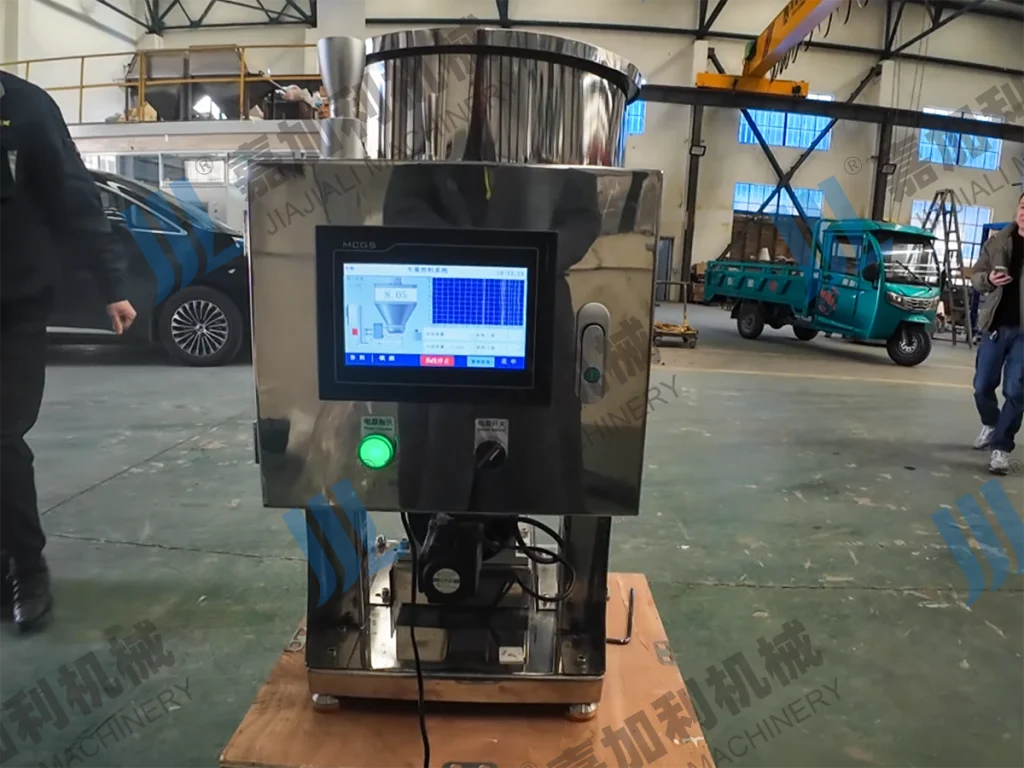
A loss-in-weight feeder (also called a gravimetric feeder) is a dosing device that measures material by weight loss over time rather than by volume. It consists of three main parts:
1. A hopper —holding the material (additive, masterbatch, filler, or resin).
2. A feeding mechanism — usually a screw, but also vibratory trays or rotary valves — that delivers material at a controlled rate.
3. A load cell(weighing system) that continuously measures the combined weight of hopper + contents.
The name comes from the measuring principle: the feeder controls the rate of weight loss. If the system loses exactly 50 g per minute, it’s feeding 50 g per minute — regardless of density changes, humidity, or how packed the powder is.
How Is a Loss-in-Weight Feeder Works, Step by Step
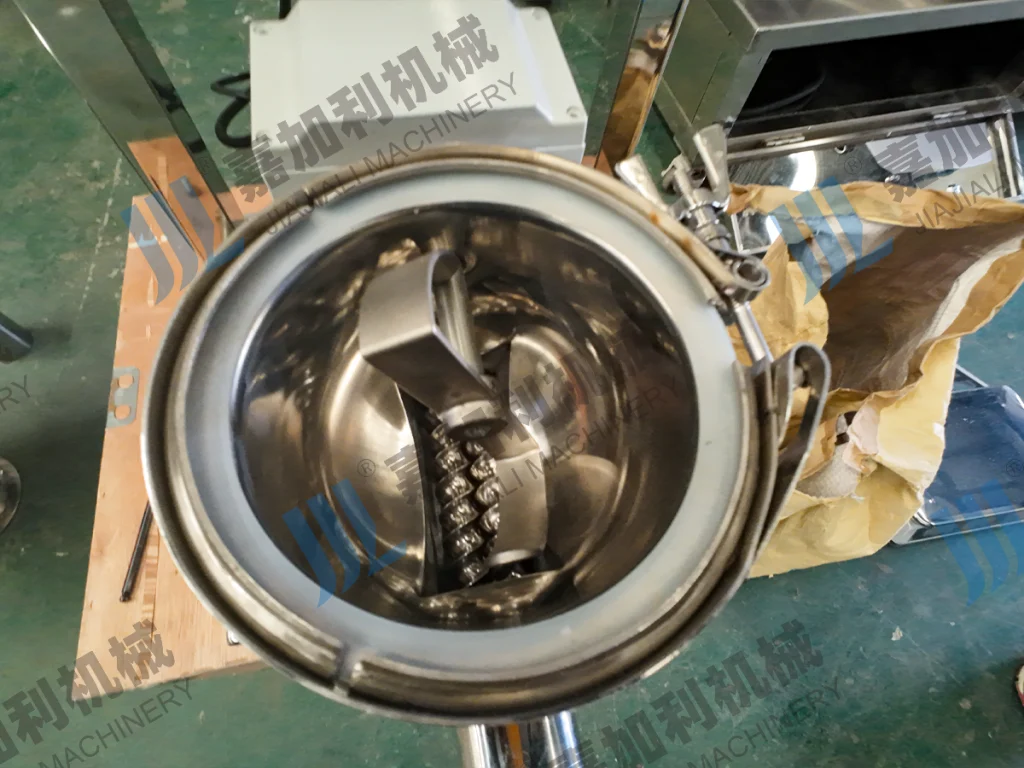
1. Weighing
The load cell reads the total weight of the hopper and its contents many times per second.
2. Rate calculation
The controller computes how fast the weight is decreasing. That’s the actual feed rate.
3. Closed-loop control
The controller compares the actual rate to the setpoint (e.g., “3.5 kg/h of stabilizer”) and adjusts the screw speed or vibrator amplitude to close the gap.
4. Refill cycle
When the hopper gets low, a refill valve (or upstream auger) tops it up quickly. During refill the feeder switches to “volumetric mode” from the known screw speed, then returns to gravimetric control once the weight signal is stable. This brief mode switch is automatic and typically takes just a few seconds.
The result: continuous, gravimetric-accurate dosing even as material density drifts — something a volumetric feeder simply cannot do.
Gravimetric vs Volumetric: What’s the Real Difference?
A volumetric feeder meters by volume — a screw turning at a set speed delivers a set volume per revolution. It’s cheap and simple, but its accuracy depends on material density staying constant. Powder that packs differently, pellets with different bulk density, or a humid day all change how many grams actually come out per revolution.
A loss-in-weight (gravimetric) feeder measures the grams directly and corrects in real time. If density changes, the screw slows down or speeds up to keep the mass flow constant.
For most compounding applications — especially masterbatch, stabilizers, lubricants, and pigments — accuracy is worth more than the price difference, which is why gravimetric is the standard for critical additives.
Where Loss-in-Weight Feeders Matter in Compounding
Additive dosing
stabilizers, lubricants, UV absorbers, antioxidants: small percentages with tight tolerances.
Masterbatch feeding
color and functional masterbatch where shade consistency depends on dose consistency.
Filler feeding
calcium carbonate and other fillers at high rates; gravimetric control keeps the formulation stable when bulk density varies.
Recycling & regrind
blending regrind with virgin material at a controlled ratio.
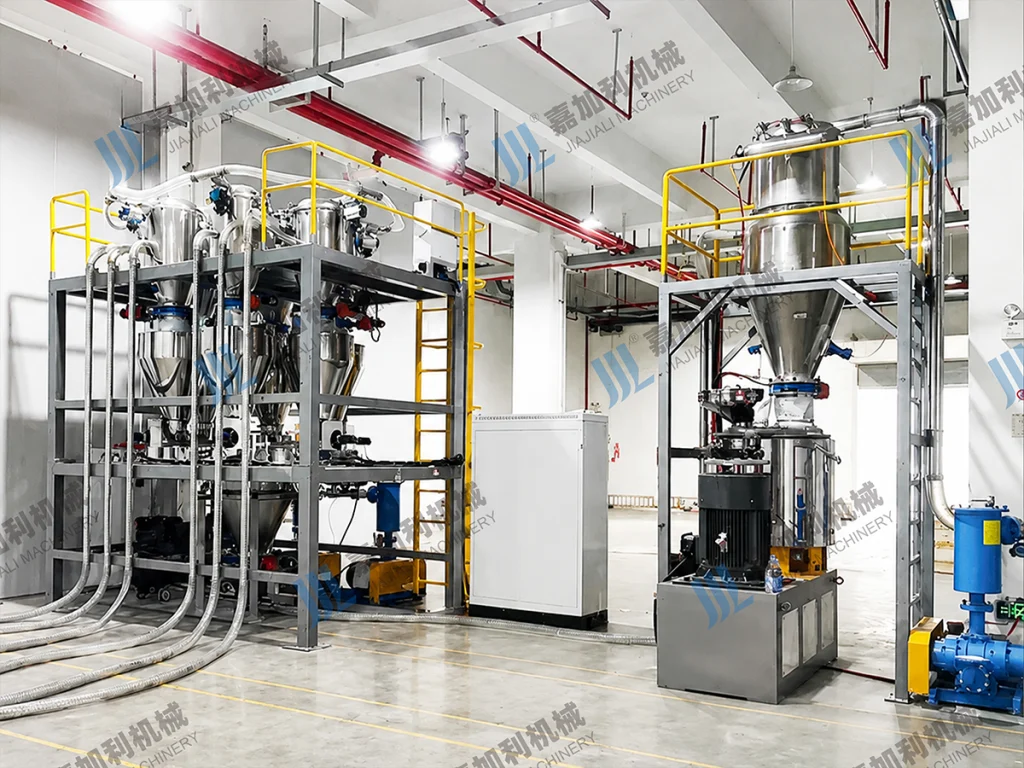
Automatic formula systems
when multiple feeders work under one controller to batch a complete formulation. In that setup, each feeder is a loss-in-weight unit and the controller coordinates them as one automatic dosing and batching system.
On a typical PVC compounding line, the sequence looks like this: resin and additives are mixed hot in an SHR high speed mixer, then cooled in an SRL-Z hot/cold mixing unit — and upstream of that mixer, loss-in-weight feeders are what guarantee the recipe is right before it ever touches the blades.
What Accuracy Can You Expect?
Typical specifications for industrial loss-in-weight feeders:
| Parameter | Typical value |
| Feed rate range | 0.1 kg/h – 5000 kg/h (depends on screw & hopper) |
| Accuracy | ±0.1% – ±0.5% of setpoint (gravimetric mode) |
| Refill interruption | 5–20 s (volumetric mode during refill) |
| Materials | Powder, granules, pellets, flakes |
| Control | PLC / HMI with recipe storage |
The accuracy figure only applies in steady gravimetric mode — which is why refill speed and the stability of the weighing system matter more than the brochure accuracy number.Accuracy only holds while the weighing system is true. That’s why calibration matters as much as the spec sheet: a feeder that’s repeatable but wrongly scaled will dose the wrong amount silently. We cover the procedure, schedule, and common drift sources in our loss-in-weight feeder calibration guide.
Buying Checklist
1. Know the real dosing range.
The feeder’s accuracy drops at the extremes of its range. Spec the feeder so your setpoint sits in the middle third of its rated range.
2. Ask how refill affects accuracy.
A fast, low-vibration refill valve keeps the interruption window short and the recovery quick.
3. Check the screw design.
Different materials need different screws (full-flight, double-flight, auger) — ask which screw is matched to your material and whether spares are stocked.
4. Consider the environment.
Load cells hate vibration and dust. Check isolation mounts and whether the control cabinet is dust-sealed for a compounding shop.
5.Ask about integration.
If the feeder will join a central feeding or batching system, confirm the communication protocol (Profibus, Ethernet/IP, etc.) matches your PLC.
FAQ
Q: How do you calibrate a loss-in-weight feeder?
A: With a two-point procedure using certified test weights: set zero, apply a known weight to establish the span, then confirm with a catch test. Most plants verify every 6-12 months and recalibrate after any disassembly or move. Full steps are in our calibration guide.
Q: How accurate is a loss-in-weight feeder in real operation?
A: Typically ±0.1% to ±0.5% of setpoint in steady gravimetric mode. Accuracy drops briefly during refill, when the feeder runs in volumetric mode (usually 5-20 seconds), so refill speed and mounting stability matter as much as the stated figure.
Q: How often does a loss-in-weight feeder need calibration?
A: The weighing system self-checks continuously; most plants do a full calibration check every 6–12 months or after the hopper is disassembled for cleaning.
Q: Can it feed both powder and pellets?
A: Yes, with the right screw and hopper design. Powders need gentle, non-bridging hoppers; pellets need larger screw flighting. Tell the supplier your material before quoting.
Q: What’s the difference between loss-in-weight and gain-in-weight feeding?
A: Loss-in-weight measures material leaving the hopper; gain-in-weight measures material arriving in a batch vessel below. Loss-in-weight is standard for continuous processes; gain-in-weight is common in batch mixing.
Q: Do I need one feeder per ingredient?
A: In a continuous compounding line, typically yes — each ingredient that needs accuracy gets its own feeder. For batch processes, ingredients can be weighed sequentially into one hopper.
Q: Can a loss-in-weight feeder replace my current screw feeder?
A: Usually yes, with minimal line changes — the mounting flange and control signal are often compatible. The upgrade typically pays for itself in reduced formulation waste and fewer off-spec batches.
Want the full picture?
Loss-in-weight feeders work best as part of a complete automatic dosing and batching system. Send your formulation and line rate to the JIAJIALI team for a feeder configuration — including hopper size, screw type, and accuracy estimate for your specific materials.